
Ever challenging the status quo
From neuroscience and business to optics and music, the 天美传媒 solves problems in unconventional ways to jump-start progress and create new standards.
Our world, ever better


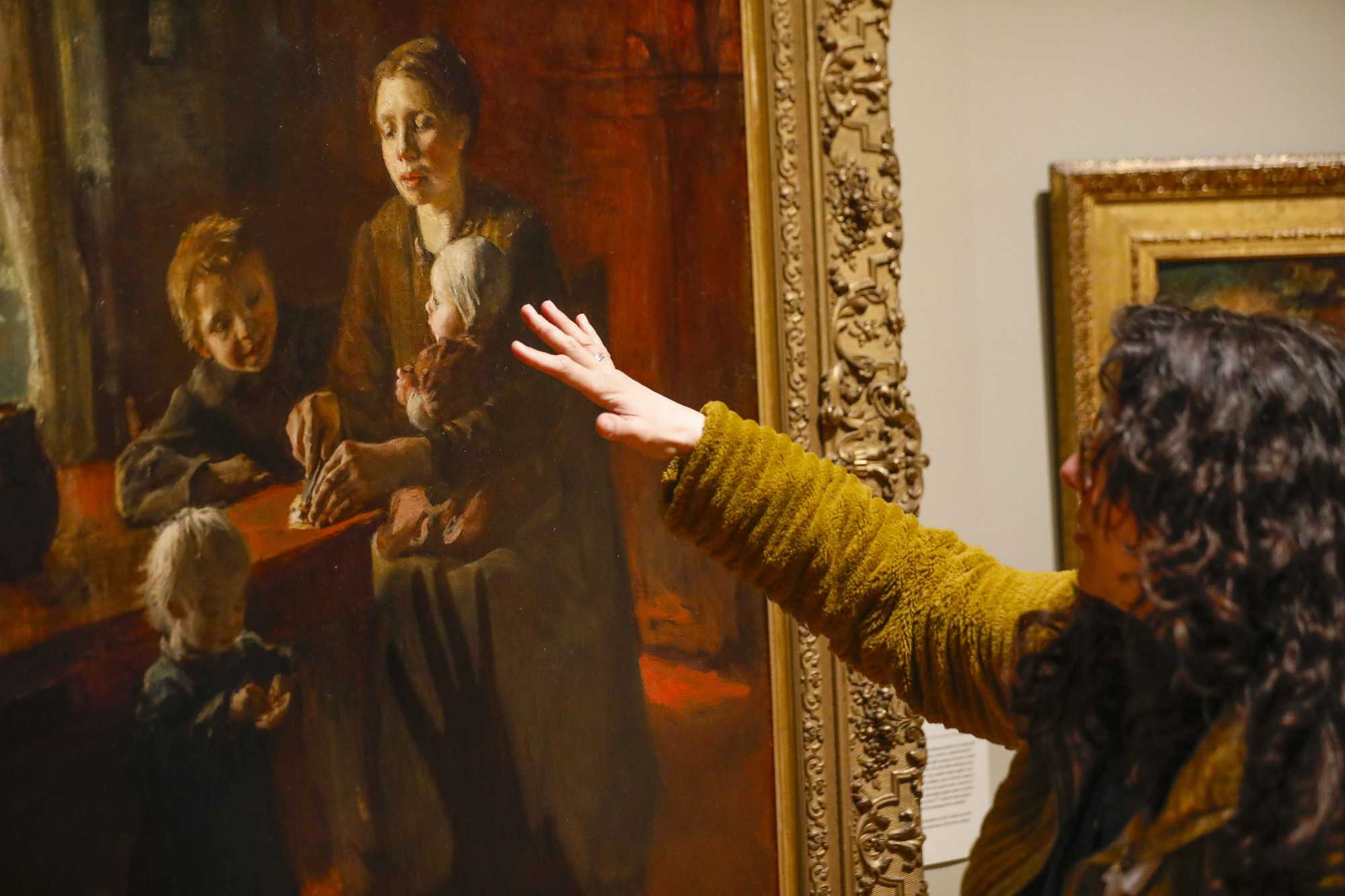
After a day of seeing and treating patients, eight faculty-physicians from the 天美传媒 met at the University鈥檚 (MAG). They sat on folding stools before a painting of a woman and three children gathered around a table, on which the woman appeared to be cutting something. Pink sticky notes concealed the painting鈥檚 label with its title, artist, and other context.
鈥淲hat do you see?鈥� said , an assistant professor at the , a family physician in the UR Medicine Primary Care network, and the group鈥檚 facilitator.
Rodrigues had just asked the first question of the , the lynchpin of the Art of Observation partnership between the University鈥檚 medical school, the , and the museum.
Designed to enhance observational skills for healthcare professionals, the sustained viewing and structured dialogue help participants unpack their assumptions, consider different perspectives, and avoid jumping to conclusions鈥攁mong other cognitive biases鈥攂ased on titles, dates, or locations. (That information is only revealed with the fourth question, when the sticky notes come off.)
鈥淚 see a mom cutting food for her children,鈥� one member of the group said. 鈥淲hy doesn鈥檛 she use a cutting board on that nice wooden table?鈥�
鈥淪he鈥檚 the maid,鈥� another suggested.
鈥淏ut the kids look like her,鈥� someone countered.
鈥淭he room鈥檚 a bit barren and skimpy.鈥�
鈥淚 don鈥檛 know if it鈥檚 skimpy, or just blurry. It actually looks lush, maybe lit by a fire.鈥�
鈥溾�楽kimpy鈥� is definitely subjective,鈥� said Rodrigues. 鈥淲hat else do you see?鈥�
After a minute of silence, one responded: 鈥淭he kids seem healthy.鈥�
鈥淭he kids are hungry. Look how their hair is disheveled and they鈥檙e staring at the food she鈥檚 cutting. They鈥檙e starving.鈥�
鈥淥r did they just wake up from naps? Kids are always hungry.鈥�
Each observation revealed a unique focus, perspective, and lived experience鈥攚hich is exactly what doctors and nurses often bring to the exam room.
By observing our Memorial Art Gallery masterpieces, students and clinicians discover new angles to understanding patients and providing better care.
They also put into practice the Five Question Protocol of the Art of Observation: What do you see? Does this remind you of anything? What鈥檚 the story? What is your evidence? What information would confirm your hypotheses? What did you observe about yourself?
鈥淓verything about the 5QP is designed to build clinical skills,鈥� says , a senior associate at the Memorial Art Gallery and with the . 鈥淭his protocol evolved in response to a concern that physicians were jumping to conclusions. The Art of Observation program was designed to slow the viewer down, to actually focus on how they know what they know.鈥�
Daiss cofounded Art and Observation at the 天美传媒 in 2002 with , now a professor emeritus, after they both read about a program at Yale University that focused on enhancing medical students鈥� observational skills through the study of detailed Victorian narrative pictures. Each educator brought unique interdisciplinary training to the partnership, with Daiss having experience in both art history and hospital-based pastoral care, and Clark having trained as a medical doctor before completing a doctorate in the humanities.
From the outset, Daiss and Clark have targeted the development of sound clinical practices beyond mere observational skills. These include listening, asking questions, acknowledging biases, and describing visual information, with the objective being to avoid errors in the often-complex process of clinical diagnosis.
鈥淲hile we can鈥檛 be bias-free,鈥� Daiss says, 鈥渨e can be bias-aware.鈥�
Students鈥� first taste of the program is the second day of medical school or early in the Program. During sessions at the Memorial Art Gallery, they break into small groups, study a selection of narrative paintings, and review the 5QP with a trained facilitator who has knowledge of both art history and healthcare.
鈥淥ne of our objectives for this program is learning to separate out observation from inference and assumption,鈥� says Instructor of Clinical Nursing Kristina Santory 鈥�06, 鈥�14W (MS). 鈥淚n a field that is so focused on physical assessments, lab values, and what to do next, this act of careful looking helps nursing students to pause and think: Are we seeing the whole picture?鈥�
Santory often hears students ask, 鈥溾�榃e鈥檙e looking at the same painting; how can we see such different things?鈥� That鈥檚 the most surprising, but also most enriching, part of the activity.鈥�
Far from a 鈥渙ne and done鈥� experience, Art of Observation lays the groundwork for other opportunities to engage with visual arts throughout medical school, from visits to anatomy labs to a course called Drawing to See: Drawing as a Tool to Build Observational Skills, taught by Daiss in partnership with the museum鈥檚 art courses.
Piper Schneider 鈥�27M (MD) says her experience with Art of Observation primed her to invoke the 5QP as she studied the live model in Drawing to See. Having students sit in a circle around the model, she adds, gave each one a distinct perspective that reinforced the lessons learned in the program. 鈥淭he act of actually creating the work took me back to that thought process: Am I drawing something that I only think should be there, or that I can actually verify?鈥� she says.
As Schneider prepares for clinical rotations as a medical student, she plans to 鈥渃heck in鈥� with herself using queries that arose during Art of Observation. 鈥淎m I going down the right path? Am I filling in gaps with my own biased thoughts and feelings or am I truly listening to what the patient is sharing with me? The close study of art, and drawing technique, give me tools for how to approach patient conversation and diagnostic thinking.鈥�
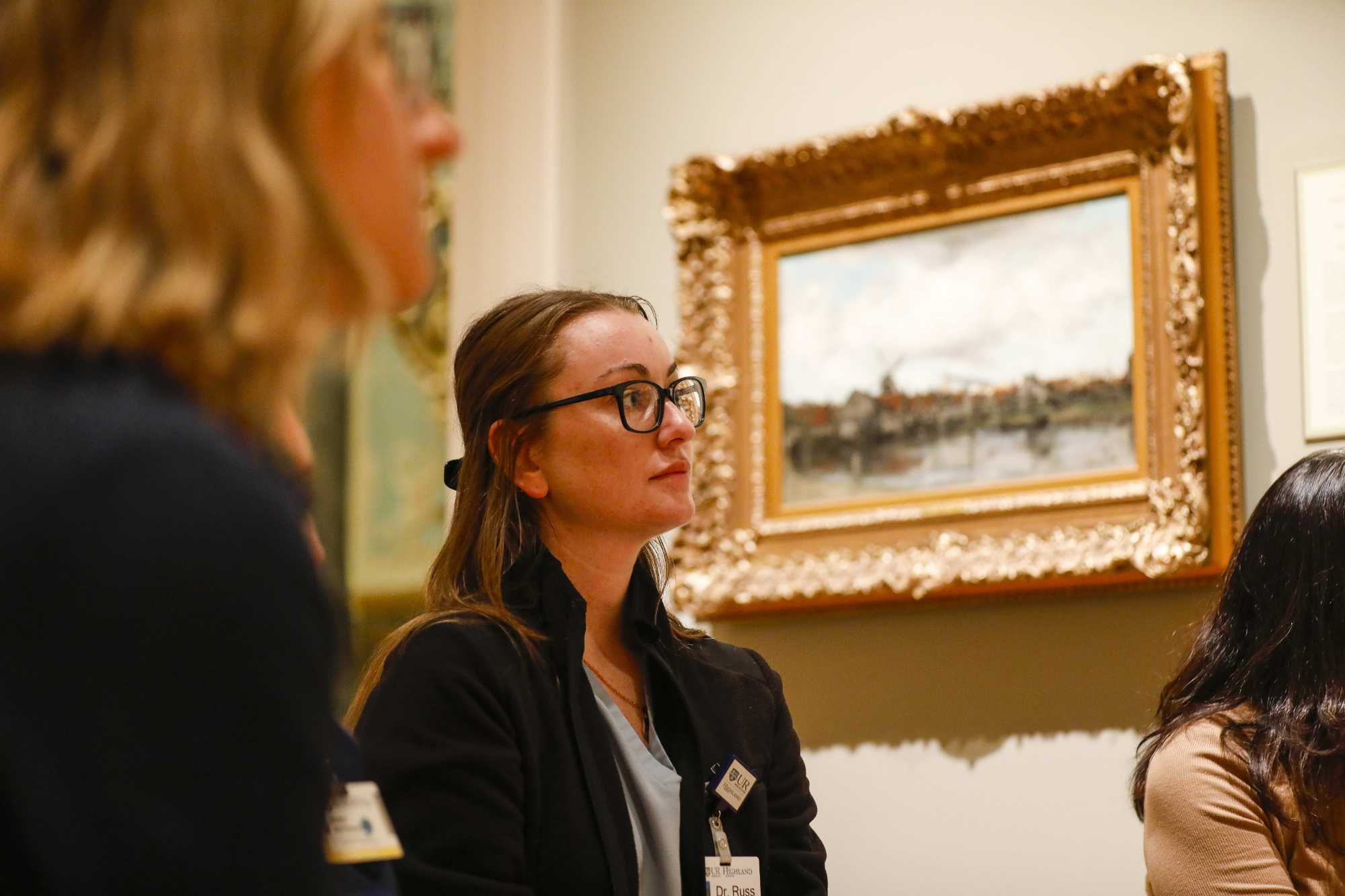
Rodrigues, Daiss鈥� former student and colleague, was likewise inspired by Art of Observation to develop the session for Rochester faculty-physicians, called Cura te ipsum (Latin for 鈥渉eal thyself,鈥� and a play on the word curate).
鈥淚 think the 5QP perfectly parallels my experience within the doctor-patient relationship,鈥� she says. 鈥淗aving the time to appreciate details and draw parallels to what we鈥檝e seen before gives me more space to pause and not rush to conclusions. Practicing that with art helps me be more mindful in practicing that with patients.鈥�
For the fourth question of the 5QP鈥斺�淲hat information would confirm your hypotheses?鈥濃�擱odrigues peeled off the sticky note to reveal the title, artist, and year: Bread and Butter, painted by Dutch artist Albert Neuhuys at the turn of the twentieth century. She added that George Eastman, one of Rochester鈥檚 most notable philanthropists, kept this painting on prominent display in his East Avenue mansion.
鈥淗e and his mother were very close,鈥� said Rodrigues, referring to Eastman. 鈥淭hat might help us think about why he chose this for his home.鈥� This prompted a flurry of comments.
鈥淭his protocol evolved in response to a concern that physicians were jumping to conclusions. The Art of Observation program was designed to slow the viewer down, to actually focus on how they know what they know.鈥�
鈥淪o it is a mother and children!鈥�
鈥淭hey look just like her.鈥�
鈥淗ow else,鈥� Rodrigues asked the group, 鈥渄oes this context support or resolve uncertainties in your conjectures?鈥�
鈥淚 feel better for this little family that they have access to butter!鈥�
鈥淎nd I feel better that she isn鈥檛 cutting into that table.鈥�
鈥淯nless it鈥檚 from IKEA,鈥� someone added, eliciting laughter from the others.
This stage of the 5QP provides the critical background and research that, coupled with careful observation, leads to diagnostic accuracy. Likewise, the invitation to suggest multiple interpretations parallels the medical practice of differential diagnosis.
The final question (鈥淲hat did you observe about yourself?鈥�) encourages participants to reflect on their experience with the 5QP and what they learned about themselves individually as well as members of a group.
For William DiPasquale 鈥�24M (MD), a resident in anesthesiology at the Medical Center, this has become an ongoing鈥攁nd extremely valuable鈥攑rocess in learning how to take care of patients, especially those nearing the end of life.
鈥淢y first semester of medical school was challenging. We were studying intensely and working daily in the anatomy lab. I struggled to come to terms with the human reality of death and dying, and wasn鈥檛 sure how to process those emotions,鈥� he explains. 鈥淚 reached out to Susie [Daiss], and she invited me to re-engage in the Art of Observation process.鈥�
Dipasquale adds, 鈥淭he Memorial Art Gallery became a space where I could go, find inspiration, have moments of reflection, and process things I was learning and doing in class. Sharing these reflections helped me find a personal sense of peace, to harness my emotions in a positive way. Now I鈥檓 much more comfortable engaging with patients who are actively dying, largely thanks to this long-term reflective process. It鈥檚 already shaping my career.鈥�


